课题背景 Research Background
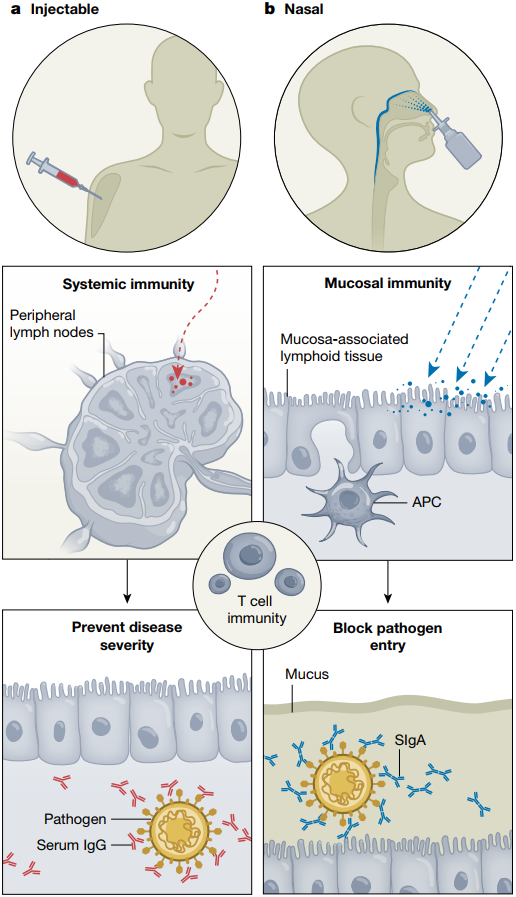
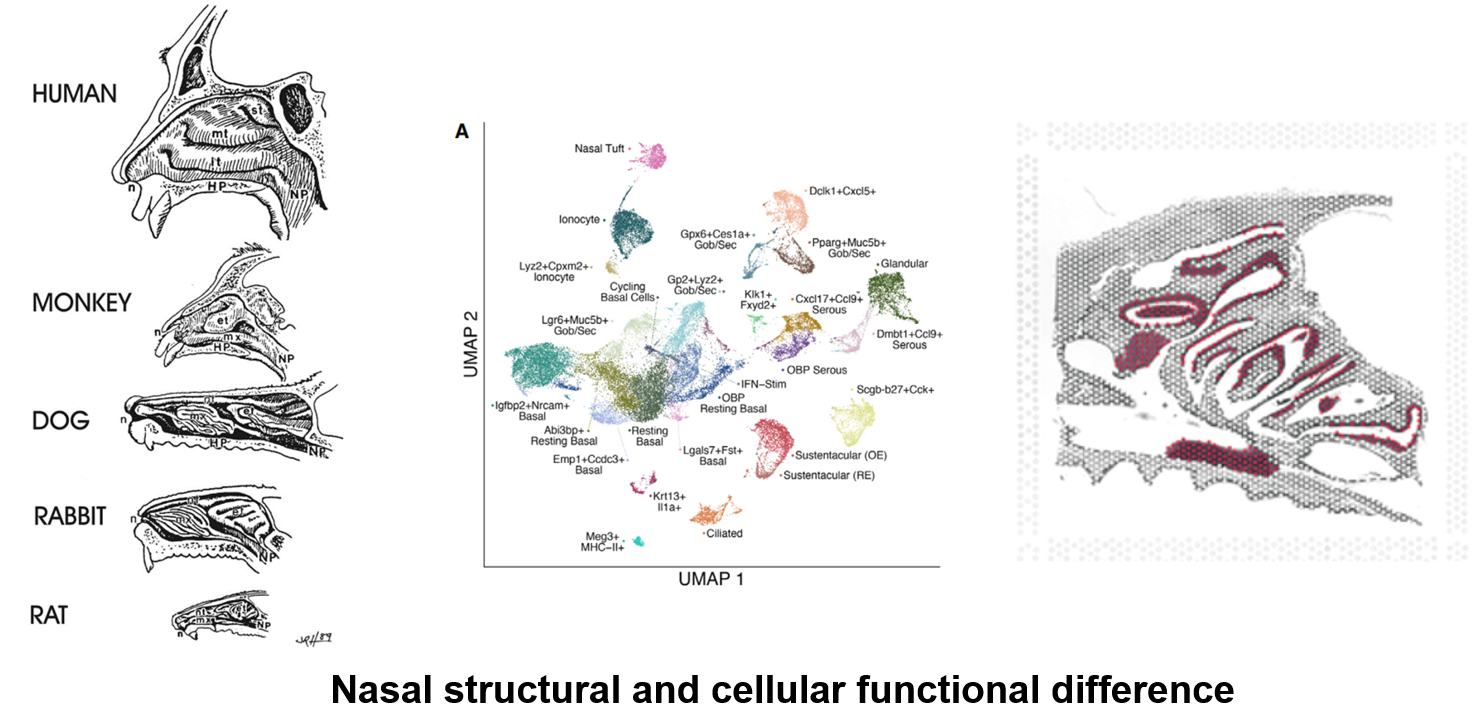
相较于注射式疫苗,鼻腔疫苗因其通过黏膜免疫诱导局部和全身双重保护,并直接于病毒感染部位上呼吸道发挥作用的优势,在临床前动物模型中展现出卓越的防护效果,例如能高效激活黏膜sIgA抗体和呼吸道组织驻留T细胞。然而,这类疫苗在人体临床试验中往往效果有限,保护效率显著低于动物数据。这种跨物种差异提示动物模型与人类鼻腔黏膜的免疫微环境可能存在本质区别,例如黏膜屏障结构、免疫细胞分布、抗原呈递机制或先天免疫应答的动力学差异。但当前研究对跨物种鼻腔免疫机制的对比分析不足,导致动物实验结果难以有效转化,制约了黏膜疫苗的临床应用。 Compared to injectable vaccines, nasal vaccines have demonstrated superior protective efficacy in preclinical animal models by leveraging mucosal immunity to induce both local and systemic immune responses, such as effectively activating mucosal sIgA antibodies and tissue-resident T cells in the respiratory tract. However, their performance in human clinical trials has been inconsistent, often showing significantly lower protection rates compared to animal data. This interspecies disparity suggests fundamental differences in the nasal mucosal immune microenvironment between animal models and humans, including variations in mucosal barrier structure, immune cell distribution, antigen-presenting mechanisms, or innate immune response dynamics. Current research lacks comprehensive cross-species comparisons of nasal mucosal immunity, leading to challenges in translating animal findings to clinical applications and hindering the development of effective mucosal vaccines.