Study on the Mechanism of Lysosomal Protein in Tumor Metastasis Model
溶酶体蛋白在肿瘤转移模型中的作用机制研究
Hanlin Zou (邹瀚琳) - [email protected]
Supervisor: Alan Jian Zhu (朱健)
Affiliation: Peking University (北京大学)
Background
Tumor metastasis, the spread of cancer cells from a primary site to distant organs, is a complex multi-step process and remains the primary cause of cancer-related mortality. Understanding the molecular mechanisms driving metastasis is crucial for developing effective therapeutic strategies. Lysosomes, once considered mere cellular recycling centers, are increasingly recognized for their pivotal roles in various cellular processes, including those critical for cancer progression and metastasis, such as cell migration and invasion.
Previous research has highlighted the involvement of lysosomes in metastasis. For instance, studies have shown that lysosomal activity can influence cell adhesion by degrading proteins like E-cadherin, thereby promoting cell detachment and motility. Lysosomes are also implicated in clearing dysfunctional organelles through autophagy, which can support cancer cell survival. Furthermore, lysosomal exocytosis can aid in degrading the extracellular matrix, facilitating invasion. While the metabolic functions of lysosomes in these processes are somewhat understood, their role in coordinating intracellular signaling pathways (such as PI3K/AKT/mTOR and Notch pathways, known regulators of cell migration) to influence tumor cell metastatic potential remains largely unexplored. This project aims to investigate this critical knowledge gap.
Research Methods
This study will employ a multi-faceted approach, combining in vitro cell-based assays with in vivo animal models and leveraging prior proteomic analyses:
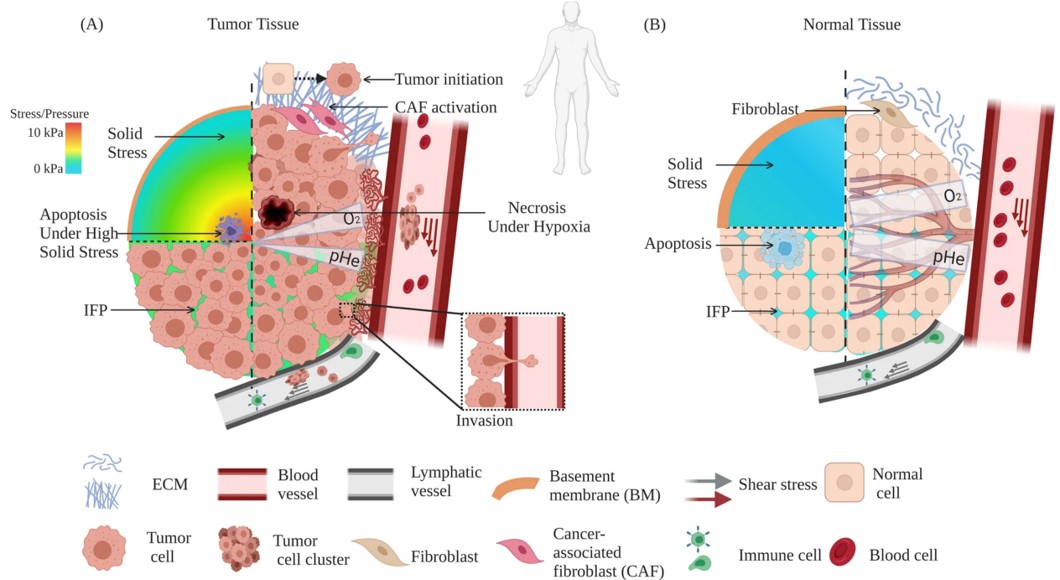
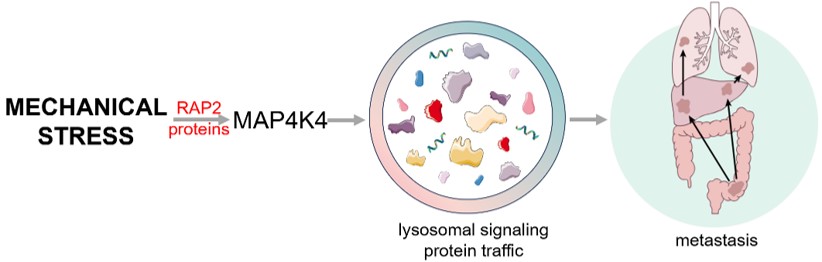
- Model Systems: Utilize established in vivo tumor models in Drosophila and mice, alongside a mechanical pressure-induced cell migration model in cell culture to mimic aspects of the tumor microenvironment.
- Target Identification: Focus on lysosomal proteins previously identified through proteomic screening as being enriched in highly metastatic tumor cells.
- Functional Screening: Employ RNA interference (siRNA) techniques to systematically knockdown the expression of candidate lysosomal proteins in tumor cell lines. The impact on cell migration and invasion will be assessed using cell scratch (wound healing) assays and the mechanical pressure model.
- Signaling Pathway Elucidation:
- Identify protein-protein interactions and potential upstream/downstream signaling molecules associated with the target lysosomal proteins using co-immunoprecipitation (Co-IP) followed by mass spectrometry or western blotting.
- Confirm the subcellular localization of key signaling pathway components and their co-localization with lysosomes using immunofluorescence staining and confocal microscopy.
- In Vivo Validation: Validate the role of identified lysosomal proteins and associated signaling pathways in tumor metastasis using the established Drosophila and mouse in vivo models.
- Clinical Relevance: Analyze clinical databases and collaborate with hospitals to correlate the expression or activity of identified lysosomal proteins/pathways with patient outcomes, aiming to assess the clinical significance of the findings.
Expected Outcomes
This research project is designed to comprehensively investigate the role of specific lysosomal proteins as crucial regulators of signaling pathways that drive tumor metastasis. By systematically screening and characterizing these proteins, we expect to:
- Identify novel lysosomal proteins that significantly contribute to the migratory and invasive capabilities of tumor cells.
- Elucidate the detailed molecular mechanisms by which these lysosomal proteins modulate intracellular signaling pathways (e.g., PI3K/AKT/mTOR, Notch) to promote metastasis.
- Establish a more complete understanding of the lysosome as a signaling hub in the context of tumor progression.
- Provide new insights into the fundamental biology of tumor metastasis, potentially revealing novel therapeutic targets.
- The findings could pave the way for the development of innovative anti-tumor drugs that specifically target lysosome-mediated metastatic pathways, ultimately aiming to improve outcomes for cancer patients.
Graphic Summary
References
- [1] Gerstberger S, Jiang Q, Ganesh K. Metastasis. Cell. 2023 Apr;186(8):1564-1579.
- [2] Wang D, Cao X, Zhang Y, Liu Y, Yao C, Ge W, Xu Y. LAMP3 expression correlated with poor clinical outcome in human ovarian cancer. Tumour Biol. 2017 Mar;39(3):1010428317695014.
- [3] Morgan MJ, Fitzwalter BE, Owens CR, Powers RK, Sottnik JL, Gamez G, Costello JC, Theodorescu D, Thorburn A. Metastatic cells are preferentially vulnerable to lysosomal inhibition. Proc Natl Acad Sci U S A. 2018 Sep;115(36):E8479-E8488.
- [4] Radisavljevic Z. Lysosome activates AKT inducing cancer and metastasis. J Cell Biochem. 2019 Aug;120(8):12123-12127.
- [5] Tang T, Yang ZY, Wang D, Yang XY, Wang J, Li L, Wen Q, Gao L, Bian XW, Yu SC. The role of lysosomes in cancer development and progression. Cell Biosci. 2020 Nov;10(1):131.
- [6] Banushi B, Joseph SR, Lum B, Lee JJ, Simpson F. Endocytosis in cancer and cancer therapy. Nat Rev Cancer. 2023 Jul;23(7):450-473.
- [7] Hernandez GA, Perera RM. Autophagy in cancer cell remodeling and quality control. Mol Cell. 2022 Apr;82(8):1514-1527.
- [8] Assi M, Kimmelman AC. Impact of context-dependent autophagy states on tumor progression. Nat Cancer. 2023 May;4(5):596-607.
- [9] Naegeli KM, Hastie E, Garde A, Wang Z, Keeley DP, Gordon KL, Pani AM, Kelley LC, Morrissey MA, Chi Q, Goldstein B, Sherwood DR. Cell Invasion In Vivo via Rapid Exocytosis of a Transient Lysosome-Derived Membrane Domain. Dev Cell. 2017 Nov;43(4):403-417.e10.
- [10] Settembre C, Perera RM. Lysosomes as coordinators of cellular catabolism, metabolic signalling and organ physiology. Nat Rev Mol Cell Biol. 2024 Mar;25(3):223-245.
- [11] Xu Y, Wan W. Lysosomal control of the cGAS-STING signaling. Trends Cell Biol. 2024 Aug;34(8):622-625.
- [12] Hopfner KP, Hornung V. Molecular mechanisms and cellular functions of cGAS-STING signalling. Nat Rev Mol Cell Biol. 2020 Sep;21(9):501-521.
- [13] Zhou H, Huang S. Role of mTOR signaling in tumor cell motility, invasion and metastasis. Curr Protein Pept Sci. 2011 Feb;12(1):30-42.
- [14] Meurette O, Mehlen P. Notch signaling in the tumor microenvironment. Cancer Cell. 2018 Oct;34(4):536-548.
- [15] Bohl B, Jabali A, Ladewig J, Koch P. Asymmetric Notch activity by differential inheritance of lysosomes in human neural stem cells. Sci Adv. 2022 Feb;8(6):eab15792.
Acknowledgement
Thank Prof. Zhu and Dr. Min Liu for instructive guidance.
Thank Dr. Lebing Zhang for guidance and discussion.
Thank all Zhu lab members for daily support.