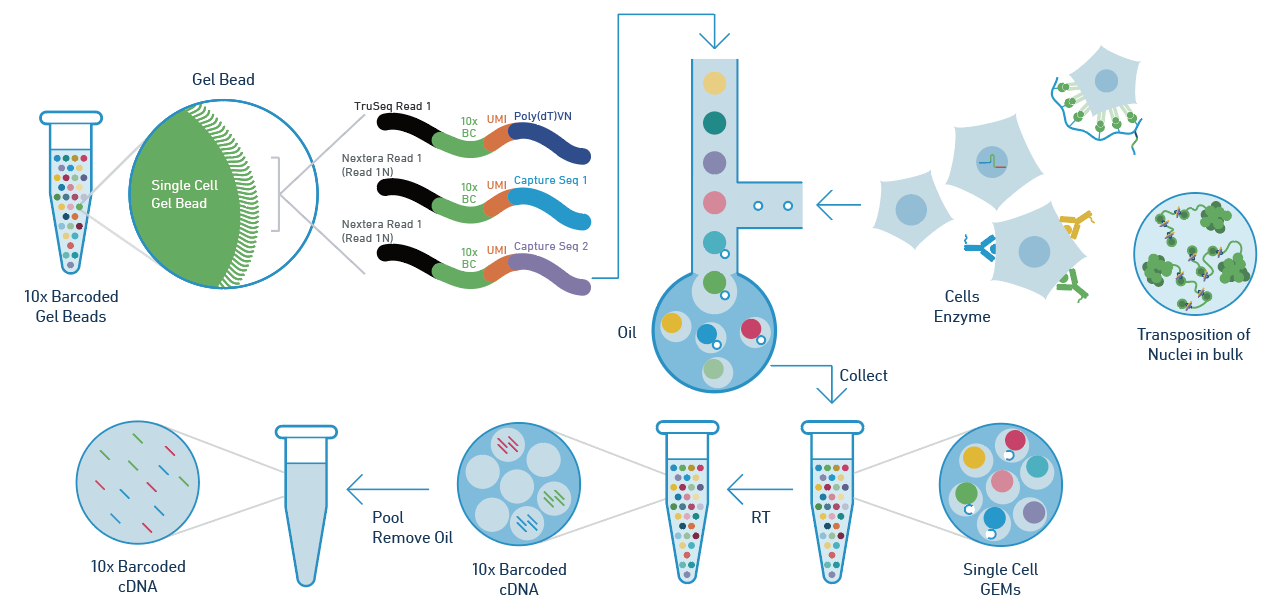
sc-RNA Sequencing
Technical Overview: This technology enables transcriptome profiling at single-cell resolution by capturing RNA molecules from individual cells. Through microfluidic-based cell capture and cDNA amplification, it detects both coding and non-coding RNAs with high sensitivity. Advanced algorithms like Seurat and Scanpy are used for dimensionality reduction (UMAP/t-SNE) and cell clustering.
▶ Identifying novel cell subtypes in complex tissues (e.g., tumor microenvironment)
▶ Tracking cellular differentiation trajectories during development
▶ Detecting allele-specific expression and somatic mutations
▶ Studying immune cell receptor diversity in adaptive immunity
Reveals cellular heterogeneity invisible to bulk sequencing, enabling discoveries like cancer stem cell populations and neurodevelopmental trajectory disruptions.
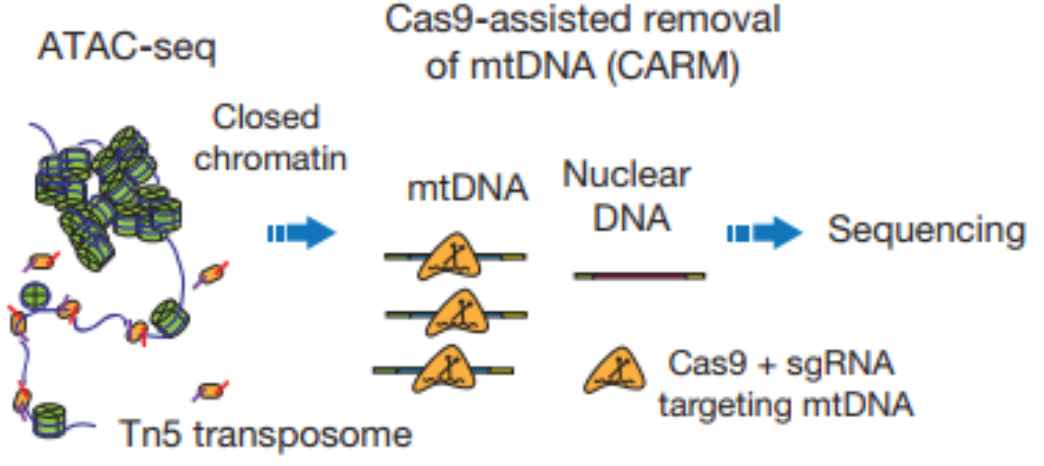
sc-ATAC Sequencing
Technical Overview: Combines hyperactive Tn5 transposase with single-cell isolation to map open chromatin regions. This identifies transcription factor binding sites and enhancer elements with single-cell precision. Integration with RNA-seq data allows functional annotation of regulatory elements.
▶ Decoding cell-type-specific gene regulatory networks
▶ Studying epigenetic memory in stem cell differentiation
▶ Investigating chromatin accessibility changes in diseases
▶ Reconstructing lineage specification pathways
Provides spatial-temporal resolution of chromatin dynamics, critical for understanding developmental disorders and cancer epigenetics.
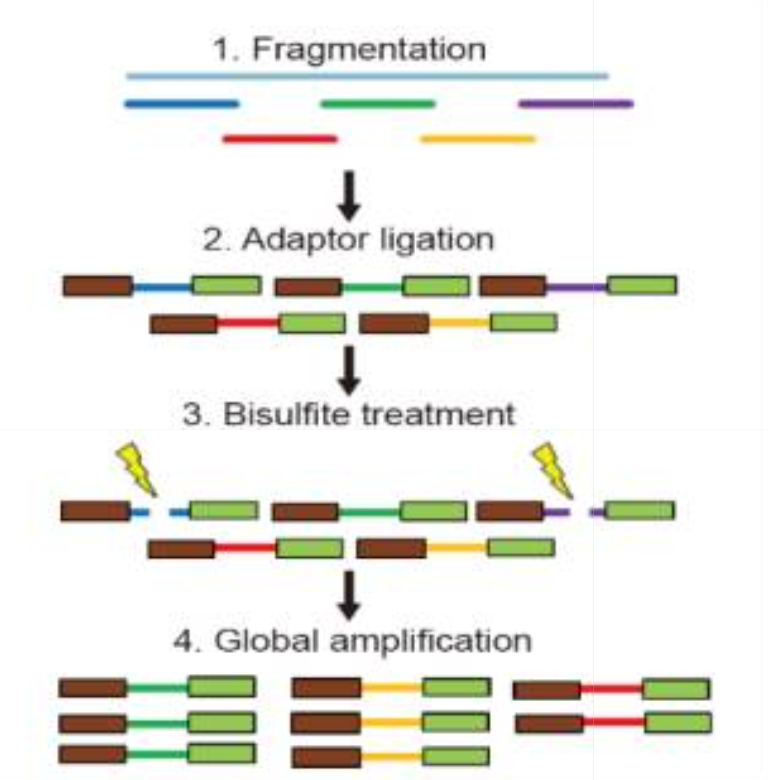
sc-Methylome Profiling
Technical Overview: Uses enzymatic or bisulfite conversion-based methods to quantify DNA methylation at CpG sites with single-base resolution. Combined with single-cell ATAC-seq, it enables joint analysis of genetic and epigenetic regulation.
▶ Analyzing genomic imprinting in early embryogenesis
▶ Identifying methylation biomarkers for early cancer detection
▶ Studying X-chromosome inactivation in female mammals
▶ Correlating DNA methylation with aging and environmental exposures
Simultaneously captures genetic variation and epigenetic modifications, essential for precision medicine applications.
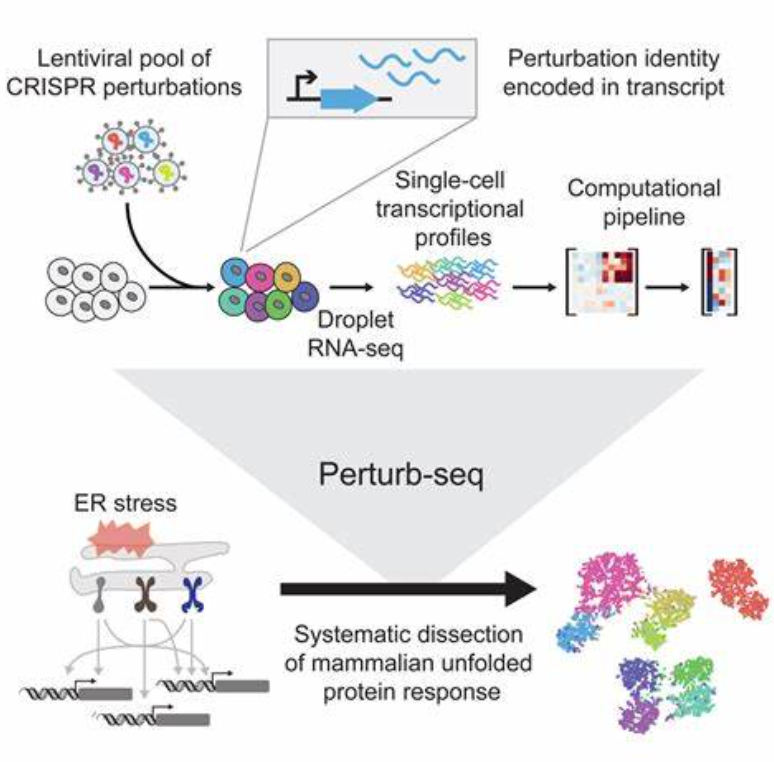
Perturb-seq
Technical Overview: Integrates CRISPR-Cas9 editing with single-cell omics to disrupt gene function at scale. Uses pooled sgRNA libraries combined with lineage tracing to assess phenotypic consequences at population and single-cell levels.
▶ Functional annotation of non-coding genomic regions
▶ Dissecting synthetic lethal interactions in cancer
▶ Modeling drug resistance mechanisms
▶ Investigating gene-environment interactions
Enables genome-wide functional screens at unprecedented resolution, bridging genomics and systems biology.